

A Muscle Car That Jumped Into Legend
Few vehicles have earned television immortality like the bright-orange 1969 Dodge Charger known as The General Lee. Launching across creeks and barns in The Dukes of Hazzard, it became a character in its own right. Decades later, the General Lee still fuels the imagination of car enthusiasts and restorers alike. At Raybuck Auto Body Parts, we see that passion every day from customers rebuilding or reviving their Chargers with quality restoration panels and body parts.
Key Takeaways
- The General Lee is a television icon built from modified 1968–70 Chargers made to look like 1969 models
- Underneath the style, show cars used 318, 383, or 440 engines and mainly automatic transmissions
- Hundreds of Chargers were destroyed in stunts; consistency in look was maintained via parts swaps
- The roof’s Confederate flag draws serious controversy; many restorers now focus on context and craftsmanship
- Authentic restoration demands attention to body fitment, structure, and correct trim details
Did you know that over 250 Chargers were reportedly used during the show’s production?
What the General Lee Was —and Wasn’t
On-screen, the General Lee was introduced as a 1969 Dodge Charger R/T driven by Bo and Luke Duke, but the show’s production used a mix of 1968 to 1970 Chargers converted to look identical. Its defining details became instantly recognizable:
- Vivid orange paint
- The number “01” on each door
- Doors welded shut for window entry
- A roof flag and “General Lee” script above the doors
- A horn that played the first notes of “Dixie”
Although the television car is often described as an R/T, the builds varied widely—many weren’t performance models at all. What unified them was their look, sound, and screen presence.
Under the Hood: Engines, Transmission and Stunt Prep
The cars that portrayed General Lee came with whatever drivetrain the crew could obtain. Typical engines included the 318, 383, and 440 cubic-inch V8s, paired mainly with TorqueFlite automatic transmissions. While fans love the legend of a 426 Hemi, none of the show cars used one.
For jump scenes, mechanics added trunk ballast to balance flight arcs and prevent nose-dives. Stunt cars were sometimes pre-lifted in front to achieve the perfect mid-air stance. Each episode could destroy multiple Chargers, so the team constantly repaired or rebuilt cars to keep production rolling.
Stunts, Swaps and the Fleet of Chargers
The General Lee’s airborne feats required a huge fleet of vehicles. Estimates suggest that more than 250 Chargers were used during the show’s run. Jumps often bent frames beyond repair, and cars that survived were patched up for future close-ups. Mechanics kept spare bodies, sheet-metal panels, and trim pieces on hand to maintain continuity.
Because visual consistency was essential, the crew repainted and modified each car to match the same orange hue, “01” graphics, and General Lee livery. The show’s success eventually inspired a cottage industry of Charger restorations and replica builds that continues today.
Games, Films and Modern Reappearances
After the television run, the General Lee raced into digital form in video games such as The Dukes of Hazzard: Racing for Home (PlayStation) and Return of the General Lee (PlayStation 2 / Xbox). Collectors have built detailed replicas, and original production cars have sold at auction for six-figure prices. A 2005 film reboot reintroduced the car to a new generation, proving the enduring appeal of its design and energy—even as debates around its symbolism grew louder.
Legacy and Controversy
The General Lee’s roof flag has long been a flash point. While The Dukes of Hazzard originally portrayed it as a regional emblem, it is widely recognized today as a symbol tied to racism and the history of slavery. In 2015, television networks pulled reruns and manufacturers ceased producing flag-bearing replicas. Even some car owners, including professional golfer Bubba Watson, chose to remove the emblem from surviving screen-used vehicles.
At Raybuck Auto Body Parts, we believe enthusiasts can honor automotive heritage while acknowledging cultural context. Many modern builders focus on the car’s craftsmanship, design, and performance rather than its roof markings. Recognizing both the joy and the controversy keeps the conversation—and the restoration hobby—grounded in respect.
Restoring a ’68–’70 Charger: Where Authenticity Matters
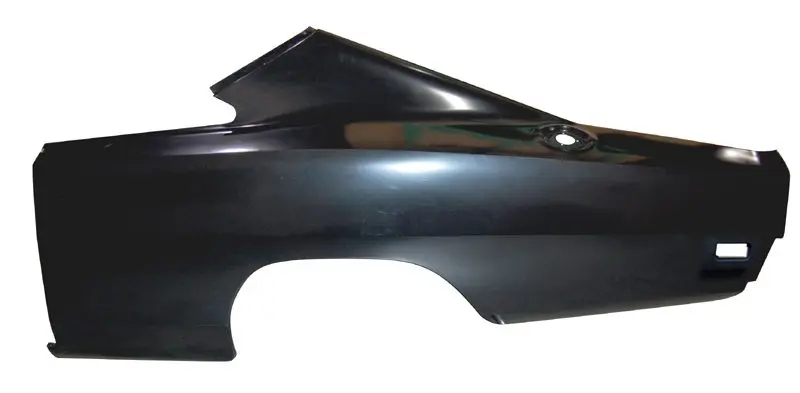
When reviving a 1969 Charger or building a General Lee-style tribute, authenticity and structure come first. Key areas demanding precision include:
Body and Fitment
- Quarter panels and trunk floors
- Roofline and rear window frame
- Rocker panels, door skins, and hood alignment
Signature Details
- Accurate “01” door graphics
- Roof script placement
- Proper grille and taillight assemblies
Structural Integrity
- Frame rails and underbody braces
- Floor pans and wheelhouses
Typical rust zones on Chargers include the lower quarters, trunk pan, and floor sections—areas where Raybuck Auto Body Parts offers high-quality reproduction panels. We stock Mopar restoration parts covering 1964–1976 models, so whether you’re patching a small section or replacing major sheet metal, we can help maintain your car’s original shape and strength.
Popular Upgrades for Drivability and Stance
Modern drivers often want reliability and comfort without sacrificing period appearance. These upgrades balance both goals:
- Front and rear disc-brake conversions
- Heavy-duty sway bars and gas shocks
- Mini-tub + spring relocation kits for wider tires
- Subframe connectors for chassis rigidity
- Electronic ignition and updated fuel delivery
Each improvement enhances control while keeping the silhouette pure. Because our parts catalog covers both factory-style and performance-oriented components, builders can choose how far to modernize their projects.
Parts Spotlight: Common Restoration Panels
| Part | Purpose |
| Front fender (LH/RH) | Replace damaged or rusted front sections |
| Quarter panel | Repair corroded rear body areas |
| Trunk floor and extensions | Rebuild storage area and structure |
| Rocker panels | Reinforce lower body strength |
| Roof skin or overlay | Correct roof damage or prepare for decal application |
| Inner wheelhouse | Restore support around rear arches |
| Bumper assemblies and hardware | Complete the classic exterior look |
These examples represent items available in our Dodge Charger catalog. Every piece is engineered for precise fitment and long-term durability.
Keeping the Legend Alive Responsibly
The General Lee’s 1969 Dodge Charger remains an icon of American television and automotive culture. It captures the freedom and rebellion of a bygone era while reminding us how cultural symbols evolve.
At Raybuck Auto Body Parts, we share the enthusiasm that keeps these Chargers on the road. Whether you’re restoring an original or building a tribute car, we supply the panels, braces, and components that let your craftsmanship shine. Explore our full selection of parts for the 1969 Dodge Charger and discover everything you need to make your project a success.
Further Reading
- General Lee (car) — A detailed look at the famous 1969 Dodge Charger from The Dukes of Hazzard, including production history, technical notes, and legacy in pop culture.
- The Dukes of Hazzard — Background stories and behind-the-scenes insights from the creators, stunt drivers, and mechanics who kept the General Lee flying week after week.







I just got done doing a 1973 Dodge Charger SE so now I’m planning on doing either my 70 Dodge Charger 500 that I bought in 74 or my sister 69 Dodge Charger that I bought from her around 1985. The 70 needs less work but the 69 is a more desirable one because it had the consul, factory mag wheels, chromeluggage rack, and an electric sun roof I always liked the Mopars